When Sound Becomes a Rainbow: The Science of Music You Can See

Photo: Internet Archive Book Images, No restrictions, via Wikimedia Commons
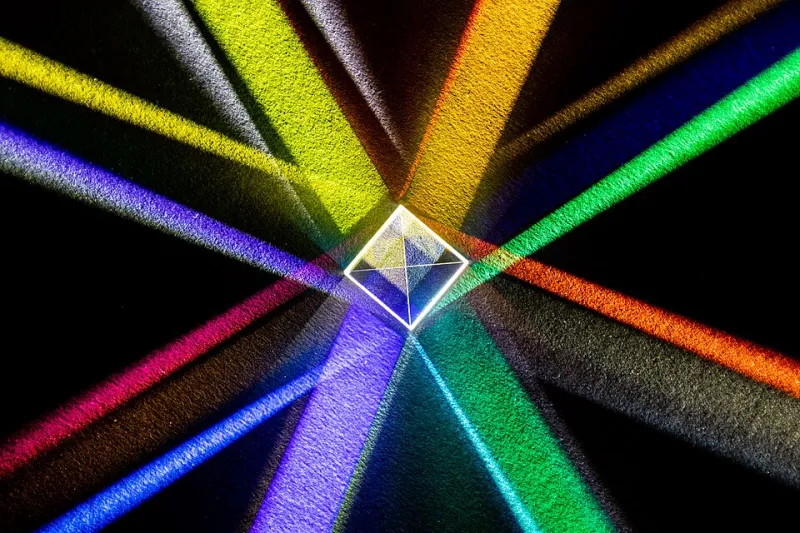
Imagine pressing play on your favorite song and watching a cascade of gold and violet bloom across your field of vision. No headset, no special effects — just your brain doing something extraordinary. For roughly 4% of the population, this isn't imagination. It's Tuesday.
This is synesthesia: a neurological experience where stimulation of one sense automatically triggers a response in another. And when it comes to music, the results can be genuinely breathtaking.
So What's Actually Happening in the Brain?
Synesthesia isn't a disorder, a hallucination, or a quirk you grow out of. It's a structural difference in how certain brains are wired. Neuroscientists believe that synesthetes — people who experience synesthesia — have heightened connectivity between brain regions that don't typically "talk" to each other. In the case of chromesthesia (the specific type where sounds trigger color perception), the auditory cortex and the visual cortex are essentially BFFs when they probably shouldn't be.
Research from the University of Edinburgh found that synesthetes show measurable cross-activation between sensory processing areas. Functional MRI scans literally light up differently when a synesthete hears music compared to a non-synesthete. Their brains aren't imagining the color — they're processing it.
What's wild is that the colors tend to be consistent. Ask a chromesthete what color a trumpet sounds like in January, and they'll give you the same answer in August. The associations are locked in, personal, and completely real to the person experiencing them.
Real People, Real Colors
Some of the most celebrated musicians in history are believed to have been synesthetes. Pharrell Williams has spoken openly about seeing colors when he makes music, describing it as a guiding force in his creative process. Billie Eilish has described a form of the experience too, where sounds and emotions map onto visual textures and hues. Classical composer Alexander Scriabin was so convinced of the connection between sound and color that he designed a "color organ" — a keyboard instrument that projected colored light as it was played.
For everyday synesthetes, the experience can be just as vivid. A pianist from Chicago once described middle C as a warm, buttery yellow, while a minor chord felt like deep indigo pressing against the edges of her vision. A music teacher in Austin said that when a student plays off-key, she sees a muddy brown — which, honestly, sounds like the most useful superpower a music teacher could have.
These aren't metaphors. They're perceptions.
Why Does This Matter for the Rest of Us?
Here's where it gets really interesting for anyone who loves music and is curious about their own inner experience: synesthesia may exist on a spectrum. Full-blown chromesthesia might be rare, but research suggests that the brain's capacity for cross-sensory association is more universal than we used to think.
A 2013 study published in Psychological Science found that even non-synesthetes consistently matched certain musical tones to specific colors across cultures — higher pitches to lighter, brighter hues, lower tones to darker, heavier shades. The cross-sensory wiring might be there for all of us, just quieter.
That's a pretty hopeful thought. It means that with intention and practice, you might be able to deepen your own sensory experience of music — not to fake synesthesia, but to access a richer, more embodied relationship with sound.
Exercises to Deepen Your Sensory Connection to Music
Think of these as gentle invitations for your brain, not hacks or shortcuts. Be patient with yourself.
1. The Color Listening Session Pick a song you love and grab some colored pencils or even just a notes app. As you listen, notice if any colors come to mind — even faintly. Don't force it. Just observe. Do the verses feel different from the chorus? Does the bridge shift the palette? Do this a few times a week with different genres and see if patterns emerge.
2. Eyes-Closed Visualization Find a quiet spot, put on an instrumental track — something without lyrics works best for this — and close your eyes. Let your mind go soft. Rather than analyzing the music, imagine it as a moving image. Is it geometric shapes? A landscape? A color that pulses? This isn't about being "right." It's about giving your brain permission to play.
3. Texture Mapping This one's a little different. Instead of color, focus on texture. Does the piano feel smooth or rough? Does the bass line feel heavy or silky? Synesthesia isn't always visual — some people experience sound as physical sensations or spatial shapes. Exploring texture can open up your sensory vocabulary in surprising ways.
4. The Reverse Practice Look at a painting or a photograph that moves you, then ask yourself: if this image had a soundtrack, what would it sound like? This reverse-engineering trains the brain to build bridges between senses in both directions.
5. Mindful Music Journaling After a listening session, write down whatever you noticed — colors, textures, temperatures, emotions, even smells if something came up. Over time, your journal becomes a map of your own sensory landscape. You might be surprised at how consistent certain associations become.
The Bigger Picture: Music as a Full-Body Experience
At LightKnotes, we think about music as something that lives in the whole body — not just the ears. Synesthesia is maybe the most vivid example of that idea, a reminder that sound doesn't stay neatly inside one sense. It spills over. It illuminates.
Whether you're a full-blown chromesthete seeing violet every time a cello plays, or someone who's just starting to notice that some songs feel warmer than others, you're tapping into something real about how music works on us. It's not just entertainment. It's a sensory experience that science is only beginning to fully map.
So the next time you put on a song that moves you, close your eyes for a second. Notice what else shows up. You might be surprised at what your brain has been quietly painting all along.
Curious about how music affects your brain in other ways? Explore more in our Wellness & Music Science section.