Alone With the Radio: Why the Driver's Seat Became America's Most Honest Place to Cry
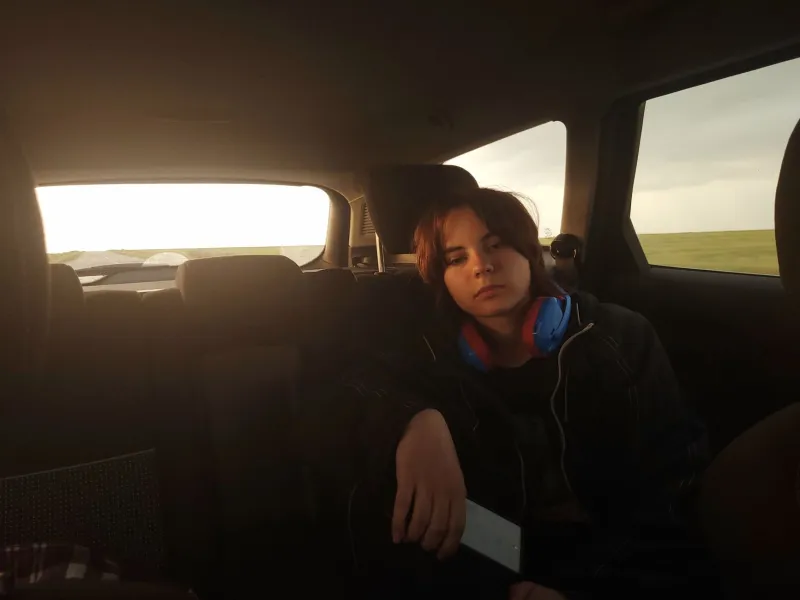
Ask around and you'll hear the same confession, again and again. The song came on — that song — somewhere between the on-ramp and the exit, and suddenly the tears were there before there was time to stop them. Nobody saw. Nobody needed to know. The car held it all.
If you've cried in your car, congratulations: you're part of one of the most quietly universal experiences in American life.
The Last Private Room on Wheels
Think about your day. The office is open-plan. The home is shared. The gym has cameras, the phone has an audience, and even the bathroom stall isn't safe from a group chat. Privacy didn't disappear — it just got expensive, and most of us can't afford it.
But the car? The car is a sealed pod with a soundtrack you control. Doors lock. Windows tint. And unlike your bedroom, the car comes with a built-in excuse: you're already there. Nobody wonders why you're sitting in the driveway with the engine off and the chorus on repeat. Everyone knows. Everyone's done it.
Why Music Plus Motion Unlocks the Floodgates
Psychologists point to a few overlapping reasons the driver's seat works this way.
First, there's the attention zone. Driving occupies just enough of your brain — mirrors, lanes, lights — to quiet the inner editor that usually censors emotion. It's the same reason good ideas arrive in the shower. Your guard goes off duty.
Second, music itself is an emotional amplifier, especially when it's chosen by you. That playlist isn't random; it's a mirror. When a song that knows you plays in a space where no one can see you, the feeling finally gets room to move.
Third, there's the strange comfort of permitted impermanence. A red light ends. A commute ends. The car gives you permission to feel something fully because you know the moment has a natural exit. You can start and stop grief like a track.
What the Parking Lot Knows
The stories people tell about this are remarkably consistent. The new dad sitting in the hospital garage, letting the day catch up to him. The woman who drove an extra loop around the block because the bridge of the song hadn't finished what it started. The teenager after the breakup, parked at the edge of a Kroger lot, volume all the way up.
What they have in common isn't sadness, exactly. It's honesty. The car is one of the few remaining places where Americans can have an unperformed feeling.
Maybe That's the Point
We could wring our hands about a culture where people cry alone in traffic. Or we could notice something gentler: people are still finding ways to feel, even in a life that doesn't leave much room for it. Music rides shotgun, doing what it's always done — carrying what we can't say out loud.
So the next time you see someone parked, engine humming, eyes a little red, windows up — don't honk. That's not a person falling apart. That's a person putting themselves back together, one chorus at a time.