Why 7 AM Hits Different: The Circadian Science Behind Your Morning Playlist

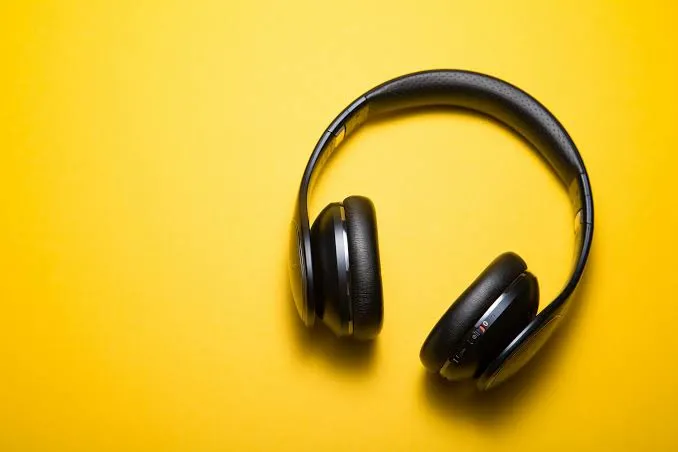
Photo: Oludegun, CC BY-SA 4.0, via Wikimedia Commons
Most of us have a go-to morning playlist. Maybe it's something upbeat to shake off the fog, or something mellow to ease into the day without startling your nervous system. But here's the thing almost nobody talks about: the time you press play might matter more than anything actually in the queue.
Yep — genre, tempo, even your all-time favorite banger could be doing far less heavy lifting than the clock on your wall.
Let's dig into why.
Your Body Already Has a Playlist
Before your phone alarm goes off, your body has been quietly composing its own internal soundtrack. Your circadian rhythm — that roughly 24-hour biological clock running everything from body temperature to hormone release — begins prepping for wakefulness well before you open your eyes.
Cortisol, often mischaracterized as purely a stress hormone, actually plays a starring role in morning energy. It peaks in what researchers call the Cortisol Awakening Response (CAR), a sharp 50–100% spike that typically occurs within 30 to 45 minutes of waking. This surge is your body's natural espresso shot — it sharpens alertness, primes motivation, and gets your brain ready to engage with the world.
Here's where music enters the picture in a genuinely fascinating way: sensory stimulation during the CAR window appears to amplify or modulate that cortisol response. In other words, what you feed your ears during that narrow morning slot doesn't just set a vibe — it may actually interact with your neurochemistry in real time.
The Golden Window (And Why Most People Miss It)
So when exactly is this magical window? Research points to roughly the first 60 minutes after waking as the most neurologically receptive period of your entire day. Your brain is literally more plastic — more open to input and emotional calibration — during this stretch than at almost any other point.
Most Americans, though, spend this window doom-scrolling, half-watching the news, or just stumbling toward the coffee maker in silence. That's a significant missed opportunity.
The good news? You don't need to overhaul your whole morning. Even a focused 20-minute listening session during this window can make a measurable difference in how you feel by mid-morning. Studies on music and mood induction consistently show that intentional listening — meaning you're actually present with the music rather than using it as background noise — produces stronger emotional and physiological responses.
Light and Sound: A Synergistic Duo
Here's where things get really interesting for anyone who's ever noticed that a song just sounds better in bright light.
Light exposure is the primary external cue that synchronizes your circadian clock. When morning sunlight (or a quality light therapy lamp, if you're in, say, a Seattle winter) hits your retinas, it suppresses melatonin and helps lock in your wake cycle for the day. But light doesn't just work on your sleep-wake system in isolation — it influences emotional processing, too.
The brain region most involved in circadian light processing, the suprachiasmatic nucleus, has downstream connections to the limbic system — the emotional core of your brain. And the limbic system, of course, is ground zero for how music makes you feel.
What this means practically: pairing intentional light exposure with intentional music listening during that first morning hour creates a kind of compound effect. You're hitting the emotional and biological systems simultaneously, reinforcing each other. Think of it less like multitasking and more like tuning two instruments at once so they stay in harmony all day.
So Does Genre Actually Matter?
Okay, fair question. If timing is king, does it even matter what you listen to?
Short answer: yes, but probably not in the way you'd expect.
Research on music and arousal suggests that tempo and rhythm are more physiologically impactful in the morning than genre labels. Songs with a tempo between 100 and 130 BPM tend to match and gently elevate resting heart rate, creating a sense of energized calm rather than jarring stimulation. This is why a mid-tempo soul track or an upbeat indie pop song might serve you better at 7 AM than either a sleepy acoustic ballad or a full-blast EDM drop.
Major key tonality also plays a role. Music in major keys activates slightly different emotional processing pathways than minor key music, and in the morning — when your emotional baseline is still being established — that tonal brightness can act like an auditory cue to your brain that the day ahead is manageable and even worth getting excited about.
That said, the most important factor beyond timing might actually be familiarity. Songs you already love trigger faster dopamine release than unfamiliar tracks because your brain has already learned to anticipate the reward. Your morning playlist isn't the place to discover new music — save that for the afternoon. In the morning, lean on the songs that already feel like home.
Building Your Morning Sonic Ritual
Ready to put this into practice? Here's a simple framework:
Step 1 — Start with light. Before you reach for your phone, get some light in your eyes. Open the blinds, step outside for two minutes, or flip on a daylight-spectrum lamp. Give it at least five minutes before you start your playlist.
Step 2 — Queue the familiar. Build a dedicated morning playlist of 15–20 songs you genuinely love, with tempos in that 100–130 BPM range. Think: feel-good R&B, upbeat Americana, bright indie pop, or energetic acoustic tracks. Whatever genre actually makes you feel like yourself.
Step 3 — Listen with intention, at least for the first song. You don't have to sit in silence and meditate on the music. But for the opening track, try to actually be with it — notice the melody, let it land. This active listening posture is what separates mood elevation from mere background noise.
Step 4 — Protect the window. Try to keep your first 30–45 minutes mostly free of news, social media, and stressful emails. You're not hiding from reality — you're just giving your cortisol curve and your nervous system the space to calibrate before the noise of the day rushes in.
The Bigger Picture
There's something almost poetic about the idea that the light coming through your window and the song coming through your speakers are working on the same biological systems, nudging you toward a better day before you've even had breakfast.
At LightKnotes, we talk a lot about where music meets the light within — and honestly, the morning is where that intersection is most literal and most powerful. Your circadian biology isn't just a sleep science curiosity. It's a daily opportunity to use sound and light as tools for genuine emotional resilience.
The playlist you build for 7 AM isn't just a playlist. It's a ritual. And the science says it's worth taking seriously.